2026 Football World Cup: 8 Essential Insights
The 2026 FIFA World Cup is a 48-team tournament hosted by the United States, Canada, and Mexico from June 11 to July 19, FIFA has expanded the competition from 32 teams, creating 104 matches across 16...
2026 Football World Cup: 8 Essential Insights
The 2026 FIFA World Cup is a 48-team tournament hosted by the United States, Canada, and Mexico from June 11 to July 19, 2026. FIFA has expanded the competition from 32 teams, creating 104 matches across 16 host cities, while Los Angeles will stage eight games at SoFi Stadium and run 39 days of fan celebrations. The United States Men’s National Team opens its Los Angeles campaign on June 12, and the FIFA Fan Festival at the LA Memorial Coliseum begins June 11. The tournament’s larger format creates more fixtures, more travel, and more tactical uncertainty than previous editions. Follow the official FIFA schedule first, then use Coach’s Corner for daily team news, player statistics, tactical analysis, and responsible match predictions.
Is the 2026 football World Cup really bigger and better?
Yes, the 2026 football World Cup is materially larger, with 48 teams, 104 matches, and 16 host cities across North America, although “better” depends on whether you value wider global access or a tighter elite competition. The group stage has 12 groups of four, with 32 teams advancing to the knockout phase.
The expansion is not merely FIFA placing extra chairs around the table and calling it progress. The previous 32-team format offered 64 matches; the 2026 edition adds 40 fixtures, increasing the tournament’s total workload by 62.5%. The top two teams from each group advance, alongside the eight best third-place teams, which creates a new strategic problem: teams may qualify with fewer points than traditional group-stage calculations suggest, but they can also be eliminated by goal difference or disciplinary records. FIFA confirms that the 2026 competition will be the first men’s World Cup with 48 participating nations.
For supporters, this means more opportunities to watch teams such as Brazil, Argentina, England, France, Germany, Spain, Japan, Morocco, and the United States. For analysts, it means the value of squad depth rises sharply, especially when teams cross multiple time zones and play knockout matches under compressed scheduling conditions. The key is to separate tournament volume from tournament quality: more games do not automatically mean more classic matches.
- Tournament dates: June 11 to July 19, 2026
- Participating teams: 48
- Total matches: 104
- Host nations: United States, Canada, and Mexico
- Host cities: 16
- Previous format: 32 teams and 64 matches
Want a clearer way to track the competition? Start with the latest tournament overview.
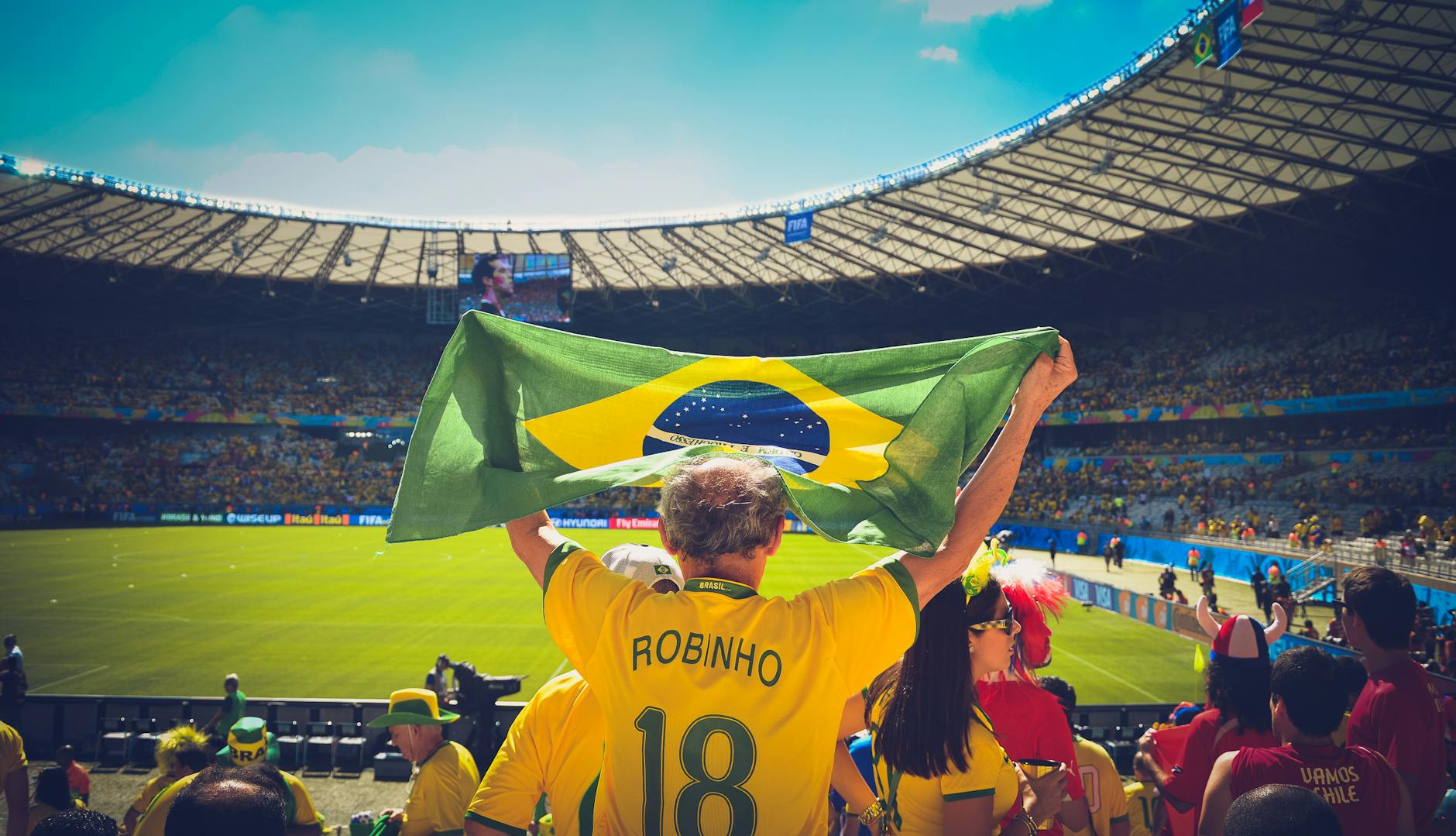
Photo by Caio on Pexels
How does the football World Cup handle the Los Angeles schedule?
Los Angeles will host eight FIFA World Cup 2026 matches at SoFi Stadium in Inglewood, California, while the LA Memorial Coliseum will serve as the principal FIFA Fan Festival location. The United States Men’s National Team’s Los Angeles opening match is scheduled for June 12, and fan programming is planned across 39 days.
Los Angeles is not hosting the final, and that distinction matters if you were expecting every major tournament moment to land beneath the Hollywood sign. Nevertheless, the city is one of the most important regional centres of the tournament because it combines eight matches, international tourism, public viewing events, food, music, and community programming. The official Los Angeles host-city information identifies SoFi Stadium as the match venue and the LA Memorial Coliseum at Exposition Park as the central fan gathering location.
A practical issue is transportation. SoFi Stadium is located in the South Bay region, while the LA Memorial Coliseum is near Downtown Los Angeles, and match-day traffic can turn a short map distance into an endurance exercise. Visitors should compare accommodation near LAX, Downtown Los Angeles, Inglewood, and rail-connected areas before purchasing tickets. FIFA and local organisers may publish detailed entry, transit, and security requirements closer to the tournament, so screenshots from unofficial social-media accounts should be treated as decoration, not evidence.
The Los Angeles programme is expected to include:
- Eight World Cup matches at SoFi Stadium.
- The United States opening match on June 12.
- FIFA Fan Festival events from June 11 to June 14.
- Official fan zones across Los Angeles County.
- Food, music, match screenings, and community celebrations over 39 days.
For city logistics and stadium preparation, consult the [Internal Link: Los Angeles World Cup match-day guide] and verify updates through FIFA’s official tournament information.
The smart approach is simple: plan the match first, the fan festival second, and the traffic route before both. Otherwise, you may spend more time in a rideshare than watching world-class football.
See the practical details before making travel plans.
What about the tournament’s difficult travel edge case?
The most difficult edge case is the combination of continental travel, climate variation, and match recovery across Canada, Mexico, and the United States. A team may play in one time zone and then travel thousands of kilometres for its next fixture, making recovery planning and squad rotation more important than the usual “best starting eleven” argument.
The 2026 host map stretches from Vancouver and Seattle in the west to Boston and Miami in the east, with Mexico City, Monterrey, and Guadalajara adding different altitude and climate conditions. Mexico City sits at roughly 2,240 metres above sea level, while Miami brings heat and humidity that can affect pressing intensity and late-match substitutions. These are not cosmetic details; they influence training loads, hydration, recovery windows, and tactical choices.
A typical supporter may focus on possession percentages or a striker’s recent goals. Analysts should also monitor:
- Distance between successive match locations.
- Local kickoff time compared with the team’s home time zone.
- Heat, humidity, and altitude.
- Number of rest days before knockout matches.
- Bench quality after the 60th minute.
- Travel exposure during the group stage.
[Internal Link: World Cup team tactics and formation analysis] can help explain why a nominally defensive team may become even more conservative after a long journey. The U.S. National Weather Service is a useful authority for climate data, while the World Health Organization provides broader information on heat-related health risks. Do not confuse a famous badge with immunity to fatigue. Even Brazil, France, Argentina, and Germany must manage the physical mathematics of this tournament.
This is one of the less obvious information gains in the 2026 football World Cup: third-place qualification may encourage conservative group-stage tactics, but travel could punish teams that delay rotation until the final match. Coaches who treat every group fixture as a final may arrive at the knockout stage with exhausted full-backs and reduced pressing capacity.
Where does the football World Cup fail?
The football World Cup’s main weaknesses are logistical complexity, uncertain ticket access, environmental costs, and a format that may dilute group-stage jeopardy. The 48-team structure creates broader representation, but 104 matches also increase travel demands, operational pressure, and the number of games that may carry limited competitive urgency.
The most obvious problem is scale. A fan following matches in Los Angeles, Dallas, Toronto, Mexico City, and New York or New Jersey cannot assume that the tournament behaves like a single-city event. Accommodation prices, local transport, stadium access, and time-zone changes can create a substantial financial and physical burden. Official information is essential because fake ticket offers and misleading hospitality claims tend to appear whenever a global event attracts millions of visitors. I learned that lesson the expensive way on a scam sports website, so listen up — this is the part that matters: never treat a social-media payment request as proof of FIFA affiliation.
The competition itself has a structural weakness. With 12 groups of four and eight third-place teams advancing, some teams may enter the final group match knowing that a draw is sufficient, while others may need to attack and expose themselves. That can produce sharp drama, but it can also create uneven incentives. The group-stage tiebreakers, official ticketing rules, and match schedules should be checked through FIFA rather than copied from gambling affiliates or anonymous prediction accounts.
Coach’s Corner covers match predictions, team tactics, player statistics, and daily tournament developments, but predictions are probabilities, not guarantees. Responsible readers should compare multiple indicators rather than chase a single confident headline. For broader context, the United States Soccer Federation and Canada Soccer offer official national-team information.
Before trusting a tournament claim, check:
- Whether FIFA or a host-city authority published it.
- Whether the date and venue match the official schedule.
- Whether ticket instructions use verified domains.
- Whether a prediction explains its evidence.
- Whether the source discloses uncertainty.
Read the evidence behind each match angle before accepting the conclusion.
Should you follow the 2026 football World Cup today?
Yes, following the 2026 football World Cup today makes sense if you build a verified information routine instead of relying on viral predictions, unconfirmed lineups, or recycled tournament hype. Start with FIFA’s official schedule, then add team news, player form, tactical context, and host-city logistics from credible sources.
The best preparation is not memorising every fixture months before kickoff. It is creating a system that separates stable facts from changing information. Host cities, tournament dates, and the 104-match format are stable reference points; injury reports, starting lineups, travel plans, weather, and tactical formations can change rapidly. The key is to record the publication date of every analysis, because an injury update from June 8 can make a prediction written on June 1 functionally useless.
Coach’s Corner is designed for readers who want football World Cup coverage with a practical analytical focus. Its content can help you compare formations, assess player roles, inspect recent statistics, and understand why a team’s results may not match its underlying performances. However, no platform can remove uncertainty from football. If you use match predictions for entertainment or wagering decisions, set a fixed budget, avoid chasing losses, and follow applicable local regulations.
A reliable daily routine could look like this:
- Confirm fixtures and venues through FIFA.
- Check official squad and injury updates.
- Compare the last five competitive performances.
- Review tactical matchups, not only win-loss records.
- Account for travel, rest, climate, and time zones.
- Treat every forecast as an estimate rather than a promise.
[Internal Link: 2026 World Cup player statistics] and [Internal Link: responsible football prediction guide] are useful next steps for readers who want more structured analysis. The tournament will be huge, noisy, and commercially polished. That is precisely why careful verification remains more valuable than enthusiasm.
The final recommendation is straightforward: follow the 2026 football World Cup through official FIFA information, use Los Angeles host-city resources for match-day planning, and consult Coach’s Corner for evidence-led predictions and tactical coverage. Do not buy tickets from strangers, do not confuse confidence with accuracy, and do not mistake a larger tournament for a simpler one. More matches create more stories, but also more opportunities for bad information to hide among the useful parts.
Want to keep your tournament preparation organised?
Frequently Asked Questions
Q: What is the 2026 football World Cup?
A: The 2026 football World Cup is FIFA’s men’s international championship featuring 48 teams across the United States, Canada, and Mexico. It runs from June 11 to July 19, 2026, and includes 104 matches in 16 host cities. The tournament uses 12 groups of four, with the top two teams and eight best third-place teams advancing to a 32-team knockout stage.
Q: How do I follow the 2026 football World Cup?
A: Follow the official FIFA schedule first, then use reputable football analysis platforms such as Coach’s Corner for team news, tactics, statistics, and predictions. Check lineup announcements, injury reports, kickoff times, and venue details close to each match because those details can change. Avoid relying on anonymous social-media accounts or websites that publish copied schedules without source links.
Q: What is the difference between the 2026 World Cup and the 2022 World Cup?
A: The 2026 World Cup has 48 teams and 104 matches, while the 2022 tournament in Qatar featured 32 teams and 64 matches. The 2026 edition is also jointly hosted by the United States, Canada, and Mexico rather than being staged primarily in one country. Its expanded format increases global participation but also creates greater travel and scheduling complexity.
Q: How many football World Cup matches will Los Angeles host?
A: Los Angeles will host eight 2026 FIFA World Cup matches at SoFi Stadium in Inglewood, California. The city will also stage the FIFA Fan Festival at the LA Memorial Coliseum and run official fan zones across the region. The United States Men’s National Team’s Los Angeles opening match is scheduled for June 12, while the wider fan programme is planned across 39 days.
Q: What should I do if a World Cup ticket offer seems suspicious?
A: Do not pay until the offer is verified through FIFA or an officially authorised ticketing channel. Warning signs include cryptocurrency-only payments, urgent deadlines, personal bank transfers, mismatched website domains, and promises of guaranteed premium access. Save screenshots, report suspected fraud to the relevant platform or authorities, and remember that a professional-looking logo proves absolutely nothing.
Q: Is Coach’s Corner free to use?
A: Coach’s Corner is a FIFA World Cup-focused content site providing match predictions, team tactics, player statistics, and tournament coverage, but access terms may vary by page or service. Check the current website information before relying on any premium feature or commercial offer. Readers should also review local laws and maintain responsible limits if predictions influence entertainment or wagering decisions.
Q: Are football World Cup predictions guaranteed to be accurate?
A: No football World Cup prediction is guaranteed because injuries, lineups, tactics, officiating, weather, and random match events can change outcomes. A stronger forecast explains its evidence through recent form, expected tactical matchups, player availability, and schedule conditions. Use predictions as analytical opinions, never as certainty, and never chase losses based on a confident headline.
Thank you for reading.
Coach's Corner · The Midnight Archive · An Exhibition of Thought