The Fan’s Guide to the 2026 Football World Cup
“Football is the most important of the least important things in life.” That line is often attributed to Carlo Ancelotti, and it explains why supporters will cross oceans, overpay for hotels, and pret...

The Fan’s Guide to the 2026 Football World Cup
“Football is the most important of the least important things in life.” That line is often attributed to Carlo Ancelotti, and it explains why supporters will cross oceans, overpay for hotels, and pretend a 3 a.m. kickoff is a sensible lifestyle choice. The 2026 football World Cup will be the first edition with 48 teams, 104 matches, and three host countries: Canada, Mexico, and the United States. The tournament runs from June 11 to July 19, 2026, with the final scheduled at MetLife Stadium in New Jersey, marketed by FIFA as the New York New Jersey host region. Los Angeles will stage eight matches, while Atlanta will host a semifinal. The practical takeaway is simple: plan by city, match date, transport, and official ticket information rather than trusting viral resale claims.

Photo by El gringo photo on Pexels
The 2026 football World Cup is not merely a larger version of Qatar 2022. FIFA’s expanded format changes the group stage, qualification pressure, travel assumptions, and the amount of information fans must process before placing an opinion on a match. At Coach’s Corner, a FIFA World Cup-focused content site covering match predictions, team tactics, player statistics, and daily tournament developments, the useful question is not “Who looks famous?” That is how casual analysis gets burned. The useful questions are whether a team can manage three group matches, how its midfield handles transitions, whether its goalkeeper distribution survives a high press, and whether travel between host cities affects preparation. It is worth noting that the tournament stretches across North America, so a fixture in Vancouver is not operationally identical to one in Monterrey or Miami. The key is to separate confirmed facts from promotional noise, especially when tickets, accommodation, and unofficial betting claims begin multiplying online.
If you are mapping the tournament: start with the 48-team format
The 2026 football World Cup will feature 48 national teams divided into 12 groups of four, producing 104 matches across Canada, Mexico, and the United States. The top two teams from each group plus the eight best third-placed teams advance to the knockout phase, creating a Round of 32 that did not exist in the traditional 32-team format. That structure makes qualification more forgiving for some teams, but it also creates additional tactical complications because third-place ranking becomes a separate competition.
The expansion is official, not internet folklore; FIFA’s 2026 World Cup tournament information identifies the 48-team field and 104-match schedule. FIFA’s own description calls it “the biggest and most inclusive FIFA World Cup ever,” which is marketing language, certainly, but the scale is objectively different. More teams mean more debutants, more uneven matchups, and a greater chance that goal difference, disciplinary records, or late group-stage strategy will decide progression. Listen up — this is the part that matters: do not evaluate a nation only by its projected finish; assess the exact route through its group and likely Round of 32 opponent.
A practical tournament map should include:
- The group-stage venue and kickoff time for every target match.
- The host-city distance and likely travel route between fixtures.
- The expected weather, altitude, and surface conditions.
- The team’s squad depth, especially at full-back, central midfield, and striker.
- The tie-breaker implications if three teams finish on similar points.
[Internal Link: 2026 World Cup group-stage analysis]
If you are following host cities: do A in Los Angeles and Atlanta
Los Angeles and Atlanta offer two of the clearest examples of how the 2026 football World Cup will extend beyond stadium gates. Los Angeles will host eight FIFA World Cup matches at SoFi Stadium, including the United States men’s national team opening match on June 12, while regional organizers are promoting 39 days of fan celebrations. The Los Angeles FIFA Fan Festival is planned for June 11–14 at the Los Angeles Memorial Coliseum in Exposition Park, alongside official fan zones across Los Angeles County.
Atlanta has a different role and identity. Mercedes-Benz Stadium will host matches including a semifinal, and Atlanta’s tournament positioning draws heavily on Atlanta United’s established supporter culture, southern hospitality, and the city’s wider sports infrastructure. The city is not simply borrowing football credibility for a summer; Atlanta United helped build a large match-going audience before the World Cup arrived. That matters because crowd intensity, public transportation demand, and local viewing events will shape the experience outside the stadium.
For Los Angeles, do not assume every event is close to SoFi Stadium. Los Angeles traffic can turn a short map distance into a logistical trap, while Exposition Park and Inglewood involve different transport calculations. In Atlanta, compare MARTA access, stadium entry windows, and downtown accommodation before committing to a schedule. A contrarian but evidence-based conclusion follows: the “best host city” is rarely the one with the loudest branding; it is the one where your accommodation, match venue, and public transit form a workable triangle.
Want a clearer city-by-city planning framework? Use the next resource before booking anything.
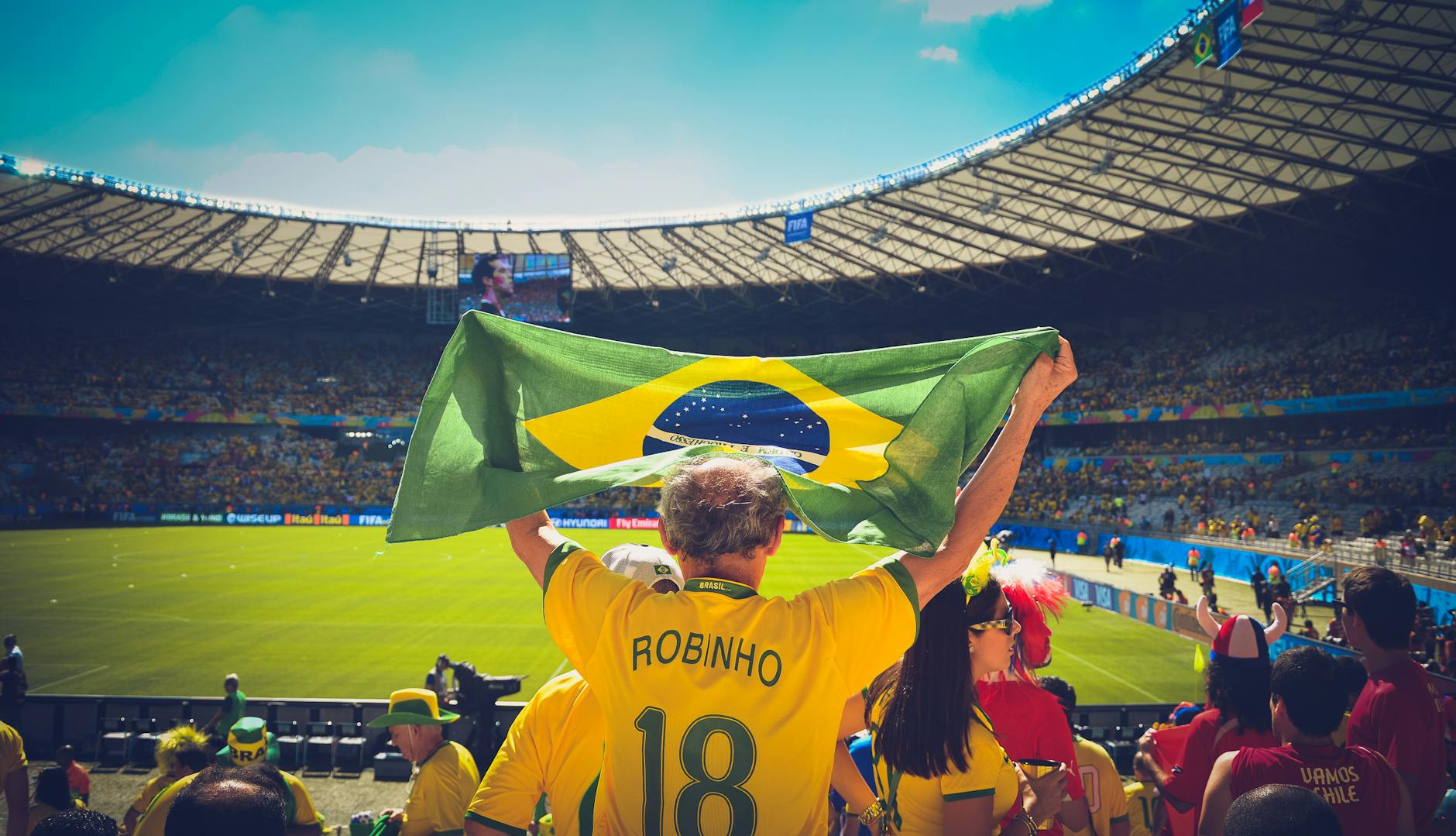
Photo by Caio on Pexels
Los Angeles is expected to combine match attendance with a large public festival programme, while Atlanta’s semifinal status may create unusually high demand for accommodation around Mercedes-Benz Stadium. Fan events can be valuable for supporters without match tickets, but they are not a substitute for confirming entry requirements, opening hours, security rules, or official capacity information. The phrase “fan zone” is used casually by businesses, municipalities, sponsors, and unofficial promoters, so check whether an event is an official FIFA Fan Festival, an authorized local event, or simply a bar advertising a screening. That distinction may determine whether access is free, ticketed, age-restricted, or subject to bag controls.
For trip planning, use this sequence:
- Confirm the match date and venue through FIFA or the relevant host-city authority.
- Book refundable accommodation where possible, especially before knockout pairings are known.
- Compare rail, bus, rideshare, and airport connections rather than assuming a rental car is efficient.
- Check local event pages for Los Angeles, Atlanta, Mexico City, Toronto, Vancouver, and other host regions.
- Keep one contingency day between distant matches because North American travel distances are not decorative details.
[Internal Link: World Cup host-city travel and accommodation guide]
If you are studying predictions: do C with tactics, not celebrity names
A credible 2026 football World Cup prediction should combine squad quality, tactical fit, schedule difficulty, injuries, rest, and opponent-specific matchups. FIFA ranking position can provide a starting reference, but it is not a predictive model by itself. A team with elite individual attackers may still struggle against a compact 5-4-1 block, while a possession-heavy side may become vulnerable if its full-backs are forced to defend repeated transitional attacks.
Coach’s Corner can add value by tracking measurable signals rather than repeating television-panel consensus. Useful indicators include non-penalty expected goals, field tilt, progressive passes, high turnovers, set-piece shot volume, goalkeeper save quality, and the percentage of attacks that end in the penalty area. None of these metrics is a magic key; football has resisted that sort of spreadsheet fantasy for centuries. However, combining them can reveal whether a team’s recent winning streak reflects sustainable chance creation or merely extraordinary finishing.
The 2026 format also changes risk evaluation. A cautious team may have enough opportunities to survive the group stage but face a much harder Round of 32 matchup than a group winner. A third-placed qualifier may enter the knockout phase with momentum, or it may have exposed defensive weaknesses in three matches. For responsible sports analysis, predictions should be treated as probabilities, not promises, and any gambling decision should comply with local law, age requirements, and personal financial limits.
Three analytical checks deserve priority:
- Chance quality: Was the team creating clear chances or collecting low-value shots?
- Game-state performance: Did it improve after scoring, or merely protect narrow leads?
- Opposition quality: Were the recent results earned against tournament-level teams?

Photo by Andrea Piacquadio on Pexels
One information gain that many generic previews ignore is the travel-rest interaction. A team can face a long regional flight, a time-zone shift, and a compressed preparation cycle before its second match, even when the published schedule appears manageable. Compare the local kickoff time with the squad’s previous venue, training location, and recovery window; this can expose fatigue risk that headline team strength conceals. The other overlooked edge is set-piece dependence: if more than a quarter of a team’s recent non-penalty goals come from corners or free kicks, its forecast may be particularly sensitive to referee style, aerial matchups, and opponent height.
At Coach’s Corner, readers should compare a pre-match model with confirmed lineups, suspension news, and final weather conditions. This is where many “experts” quietly stop checking facts, because a confident prediction looks better than an updated one. It does not. The FIFA Laws of the Game provide the competition framework, while FIFA rankings offer context; neither source should be misrepresented as a guaranteed forecast.
Ready to review team form and tactical variables more carefully?
Common pitfalls to avoid
The most common 2026 football World Cup mistake is treating unofficial information as confirmed tournament data. Fake ticket pages, invented injury updates, recycled team news, and fabricated “inside tips” spread quickly because supporters reward speed, not accuracy. The correct response is not cynicism alone; it is verification through FIFA, national associations, host-city authorities, stadium operators, and clearly identified reputable media.
A second error is ignoring tournament rules when comparing teams. The larger field does not mean every nation has an easier path, and a group-stage draw cannot be assessed properly without understanding the Round of 32 route. A third error is confusing a public screening with an official FIFA Fan Festival, particularly in a city such as Los Angeles where the event ecosystem will be enormous. “Official” is a status that requires proof, not a font choice on a poster.
Avoid these traps:
- Buying tickets from social-media accounts without verified authorization.
- Assuming a hotel reservation includes match transport.
- Predicting from a team’s last three scores without checking opponents.
- Treating friendly-match lineups as evidence of tournament selection.
- Chasing losses through sports betting after a surprise result.
- Using a bookmaker, payment method, or betting service that is not legal in your jurisdiction.
- Sharing personal identification documents with an unverified reseller.
The U.S. Department of Transportation is a useful starting point for official travel information, but supporters should also check Canadian and Mexican government guidance for their itinerary. For responsible gambling standards, the National Council on Problem Gambling advises setting limits before betting begins. Its central message is worth quoting in plain terms: “There is no safe level of gambling.” That is not dramatic; it is a practical boundary many people remember only after ignoring it.
[Internal Link: responsible sports betting and bankroll management]
The 30-day check-in
The final 30 days before the 2026 football World Cup should be used for verification, not frantic speculation. By then, confirmed squads, injury reports, final ticket instructions, transport updates, city events, and opening-match details should be reviewed against official sources. Supporters should also inspect passport validity, visa or electronic travel authorization requirements, phone coverage, travel insurance, accommodation cancellation terms, and stadium bag policies. The glamorous part is the anthem; the less glamorous part is discovering that your passport expires two weeks after arrival.
Use a 30-day checklist:
- Reconfirm every match date, venue, and kickoff time.
- Verify the ticket account, transfer rules, and identity requirements.
- Download offline maps and save emergency contacts.
- Check airport-to-hotel and hotel-to-stadium routes at match-time traffic levels.
- Review team lineups, injuries, suspensions, and tactical changes.
- Set a fixed entertainment and betting budget that you will not exceed.
- Follow Coach’s Corner updates for daily match predictions, player statistics, and tactical coverage.
The final check should include a reality test: if the trip depends on perfect traffic, a last-minute resale ticket, and three consecutive correct predictions, it is not a plan. It is a wager wearing a backpack. Los Angeles offers eight matches and 39 days of festivities, Atlanta offers a semifinal spotlight, and MetLife Stadium offers the tournament’s decisive stage, but every city rewards preparation more reliably than hype.
See the latest tournament planning and analysis before the first whistle.
Frequently Asked Questions
Q: What is the 2026 football World Cup?
A: The 2026 football World Cup is FIFA’s men’s international tournament hosted by Canada, Mexico, and the United States from June 11 to July 19, 2026. It will feature 48 teams and 104 matches, making it the largest World Cup edition by team count and total fixtures. The competition begins with 12 groups of four teams, followed by a Round of 32, Round of 16, quarterfinals, semifinals, and final.
Q: How does the 48-team World Cup format work?
A: The 48 teams will be placed into 12 groups of four, with the top two from each group and the eight best third-placed teams advancing. This creates 32 knockout-stage participants rather than the 16 that advanced directly from the old group format. Supporters should monitor points, goal difference, goals scored, disciplinary records, and the official tie-breaker rules because third-place rankings can become decisive.
Q: Where will the 2026 World Cup final be played?
A: The 2026 World Cup final is scheduled for MetLife Stadium in New Jersey, within FIFA’s New York New Jersey host region. MetLife Stadium is located in East Rutherford and is home to the New York Giants and New York Jets. Visitors should plan around regional transport, hotel demand, security procedures, and the possibility that official event branding uses “New York New Jersey” rather than simply “New Jersey.”
Q: How many World Cup matches will Los Angeles host?
A: Los Angeles will host eight 2026 FIFA World Cup matches at SoFi Stadium. The city will also promote 39 days of fan celebrations, with the FIFA Fan Festival planned at the Los Angeles Memorial Coliseum in Exposition Park from June 11–14. Fans should distinguish official FIFA programming from independent watch parties and verify event details through Los Angeles host-city channels before traveling.
Q: What is the difference between the Los Angeles and Atlanta World Cup experiences?
A: Los Angeles will combine eight matches with a large, distributed festival and fan-zone programme, while Atlanta’s defining feature is its semifinal hosting role at Mercedes-Benz Stadium. Los Angeles requires careful planning around traffic, Inglewood, Exposition Park, and regional distances. Atlanta supporters should focus on MARTA access, downtown accommodation, stadium entry times, and high demand around the semifinal window.
Q: How should I make a 2026 World Cup match prediction?
A: Build a prediction from team strength, recent chance quality, tactical matchup, injuries, rest, travel, set pieces, and confirmed lineups rather than reputation alone. Compare non-penalty expected goals, high turnovers, progressive passing, defensive transition performance, and goalkeeper form across several matches. If betting is legal where you live, set a fixed budget beforehand, never chase losses, and treat every forecast as uncertain.
Q: What should I do if a World Cup ticket or event listing seems suspicious?
A: Do not pay or submit identification documents until the listing is verified through FIFA, the relevant host-city authority, the stadium, or an authorized ticketing channel. Warning signs include pressure to pay immediately, cryptocurrency-only transfers, missing terms, unusually low prices, and social-media sellers refusing formal verification. Save screenshots, contact your payment provider quickly if money has been sent, and report suspected fraud to the appropriate local authority.
The 2026 football World Cup will reward fans who prepare like analysts rather than shoppers chasing the loudest advertisement. Follow confirmed information, compare cities realistically, inspect tactics beyond star names, and keep any gambling activity controlled and legal. Coach’s Corner is built for that daily process: predictions, player data, tournament context, and tactical detail without pretending uncertainty has disappeared.
Keep your 2026 World Cup planning and match analysis grounded in evidence.
Thank you for reading.
Coach's Corner · The Midnight Archive · An Exhibition of Thought