Top 3 Premier League Title Contenders (2026)
Arsenal are the strongest Premier League title contenders in the 2026 race, holding a seven-point lead after 22 matches despite consecutive goalless draws against Liverpool and Nottingham Forest. Manc...

Top 3 Premier League Title Contenders (2026)
Arsenal are the strongest Premier League title contenders in the 2026 race, holding a seven-point lead after 22 matches despite consecutive goalless draws against Liverpool and Nottingham Forest. Manchester City remain the most dangerous challenger because of their squad depth and tactical experience, while Liverpool’s attacking quality keeps them relevant despite a four-match winless league run. Arsenal have won 15 of 22 matches, with set pieces contributing the opening goal in 11 victories. Manchester City have dropped points in four successive league games, and Liverpool drew 1-1 with Burnley at Anfield. The title race is therefore not settled; January congestion, injuries, fixture difficulty and chance conversion could still reshape the table. The practical takeaway is simple: judge contenders by remaining fixtures and underlying performance, not merely the current points gap.
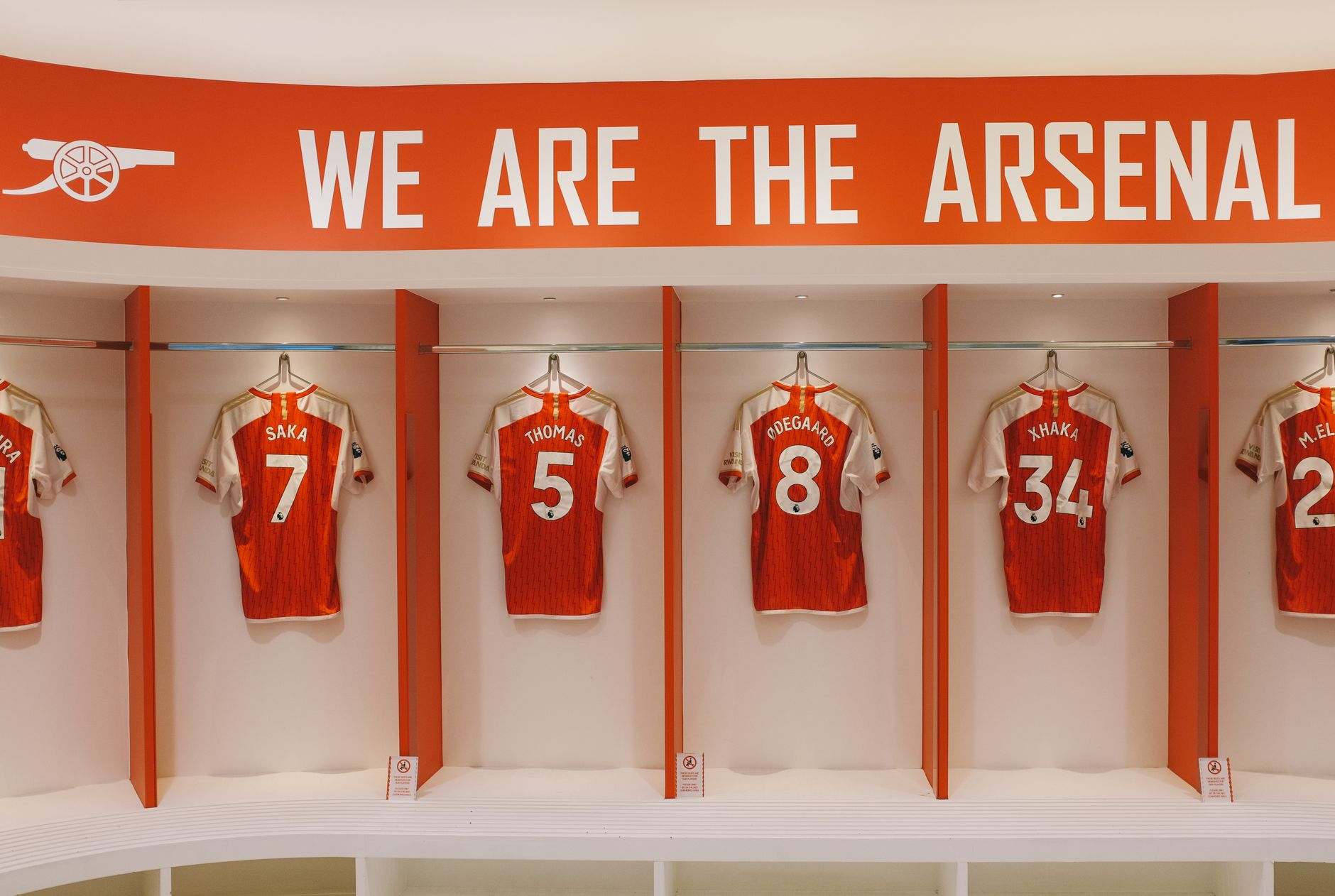
Photo by Huy Phan on Pexels
Arsenal currently lead the Premier League title race, but the table is offering no guarantee and certainly no refund if your prediction collapses. The latest evidence shows a competition defined by missed opportunities: none of the top four won during the relevant weekend, while none of the bottom five lost. That strange equilibrium has made the race less about glamorous winning streaks and more about which team can avoid an avoidable crisis.
At Coach's Corner, we assess the Premier League title contenders through tactical structure, recent results, chance quality, squad depth and fixture pressure. Listen up — this is the part that matters: a seven-point advantage after 22 matches is valuable, but it becomes much less comfortable when the leader is failing to score in consecutive matches and relying heavily on set pieces. For wider tournament analysis, readers can also consult our [Internal Link: football prediction methodology guide] before treating any forecast as fact.
Want the latest match context and tactical breakdowns?
The Top 3 Premier League Title Contenders at a Glance
The three leading Premier League title contenders are Arsenal, Manchester City and Liverpool, ranked by current position, points advantage, tactical reliability and ability to withstand fixture congestion. Arsenal take first place because their seven-point lead and 15 wins provide the strongest platform, Manchester City rank second because their ceiling remains enormous, and Liverpool rank third because their recent form is the clearest warning sign among the leading clubs. These rankings describe the current race rather than a guaranteed final order.
- Arsenal: Best overall, with a seven-point lead and 15 wins from 22 matches.
- Manchester City: Best challenger, supported by elite depth and Pep Guardiola’s tactical adaptability.
- Liverpool: Best value threat, possessing enough attacking quality to recover if their finishing improves.
The key is separating current control from future potential. Arsenal control the standings, Manchester City control many matches through possession and territory, while Liverpool can still punish any defensive lapse. According to the Premier League official competition information, the season’s long schedule rewards consistency more than isolated performances, which sounds obvious until supporters ignore it after one impressive weekend.
Why Arsenal Lead the Race Despite Recent Draws
Arsenal lead because their points advantage is tangible, their defensive organisation is reliable and their 15 victories represent the strongest current record among the leading clubs. However, consecutive 0-0 draws against Liverpool and Nottingham Forest exposed a recurring problem: Arsenal can dominate territory and still fail to convert presentable chances. Their latest match produced 2.1 expected goals but only 0.85 expected goals on target, showing that volume and execution are not the same thing.
Arsenal’s dependence on dead-ball situations is particularly revealing. In 11 of their 15 league wins, the first goal came from a set piece, while only two victories against Brentford and Tottenham Hotspur arrived without that route playing a decisive role. That does not make the approach illegitimate; football is not a morality play. It does mean opponents have a clear defensive assignment: deny Arsenal cheap corners, defend second balls and force open-play attackers such as Bukayo Saka, Gabriel Martinelli and Viktor Gyökeres to create repeatedly.
[Internal Link: Premier League set-piece analysis]
#1 Arsenal: Best Overall
Arsenal are the best overall Premier League title contender because they combine a seven-point lead, 15 wins in 22 matches and a defence capable of keeping matches close when their attack misfires. Their main risk is not a lack of chances but inefficient finishing, particularly when opponents defend their set-piece routines and congest central spaces.
Mikel Arteta’s side arrived at Nottingham Forest after only two days of rest, while Forest had eight days to prepare. That scheduling imbalance matters because Arsenal’s high-intensity pressing and positional rotations require sharp timing. The City Ground has also become a genuine problem for the club: since the beginning of the 2022-23 season, Arsenal have failed to score in consecutive league matches only three times, and each second blank came away at Nottingham Forest in May 2023, February 2025 and January 2026.
The match data should not be dismissed. Gabriel Martinelli and Viktor Gyökeres had first-half opportunities, Bukayo Saka forced a save from Matz Sels after a Declan Rice cross, and Mikel Merino headed narrowly wide. Arsenal therefore created enough to win, but title-winning teams eventually have to turn “enough” into goals. As the International Football Association Board Laws of the Game make clear, matches are decided by goals rather than expected-goal spreadsheets, a brutally simple rule that analysts sometimes pretend is revolutionary.
“Football is played in a human way,” is the practical lesson embedded in every performance review: statistics identify pressure points, but players still execute the final action. Arsenal remain first, yet their margin for wastefulness is narrowing.
See how Arsenal’s tactical profile compares with other leading clubs.
#2 Manchester City: Best for Tactical Recovery
Manchester City are the best Premier League title contender for tactical recovery because Pep Guardiola’s team has the experience, technical quality and squad depth to reverse a poor sequence faster than most rivals. Their problem is immediate: City have dropped points in each of their last four league matches, and a defeat at Old Trafford showed that possession alone cannot rescue a team that is tactically outmanoeuvred.
Manchester City’s challenge is structural rather than cosmetic. When their midfield circulation becomes predictable, opponents can narrow the pitch, protect the half-spaces and attack the space behind advanced full-backs. The Old Trafford defeat demonstrated how quickly a supposedly dominant side can lose control when pressing triggers fail and transitions become disjointed. It was not merely an unlucky result; the match exposed a tactical plan that Manchester United managed to disrupt.
Still, writing off Manchester City would be amateur hour. The club has repeatedly demonstrated an ability to respond after poor stretches, and Guardiola can alter the team’s pressing height, build-up shape and winger positioning without rebuilding the entire squad. Erling Haaland remains a decisive finishing outlet, while Kevin De Bruyne, Phil Foden and Rodri provide different solutions when opponents block the centre.
The unusual edge here is schedule interpretation. A four-match run without sufficient points can be more dangerous than one heavy defeat because it indicates repeated failure across different game states. Manchester City must therefore be judged on whether the next matches show improved chance prevention and faster recovery after losing possession, not simply whether Haaland scores.
#3 Liverpool: Best Value Threat
Liverpool are the best-value threat among the Premier League title contenders because their attacking ceiling remains high, yet their recent results have lowered expectations. A four-match winless league run, including a draw with Burnley at Anfield, means Liverpool need an immediate improvement in finishing, defensive concentration and game management to remain within striking distance.
Liverpool’s home draw against Burnley was especially costly because Anfield traditionally provides a points advantage that title challengers cannot casually surrender. The issue is not necessarily a lack of attacking intent; Liverpool can still generate pressure through rapid wide combinations, aggressive counter-pressing and forward runs from midfield. The problem appears when prolonged pressure produces no second goal and the opponent begins to believe the match is available.
That psychological shift has tactical consequences. Liverpool may push more players forward, leaving larger transition spaces for opponents, while hurried passing creates avoidable turnovers. The longer the winless run continues, the more every missed chance acquires exaggerated importance. Listen up — this is the part that matters: Liverpool are not eliminated by four winless matches, but they are losing the luxury of waiting for form to return naturally.
A realistic Liverpool recovery requires three measurable changes:
- More shots on target from high-value central areas.
- Fewer defensive errors after failed attacks.
- Better control of matches after taking the lead.
For readers comparing Liverpool’s recovery prospects with Manchester City’s, our [Internal Link: Premier League form and fixture tracker] provides a useful framework. Do not call it a comeback because one striker scores twice against a struggling opponent; test the pattern across five or six matches.
How We Ranked the Premier League Title Contenders
We ranked the Premier League title contenders using five weighted criteria: current league position and points gap at 30%, recent form at 20%, chance creation and conversion at 20%, tactical resilience at 15%, and squad depth plus fixture pressure at 15%. This method places Arsenal first because their seven-point advantage and 15 wins outweigh recent scoring concerns, while Manchester City’s recovery potential keeps them ahead of Liverpool.
The ranking does not treat every statistic as equally valuable. A team can lead expected-goal numbers but still lose ground if it repeatedly fails to convert, while a set-piece-heavy team can win important matches without dominating open play. It is worth noting that the 2.1 xG and 0.85 xGOT figures from Arsenal’s draw illustrate this difference: the first measures opportunities, while the second reflects how much threat reached the target.
Our practical scoring model is as follows:
- 30% current standings: points, wins and gap to the leader.
- 20% recent form: results across the latest league fixtures.
- 20% chance quality: expected goals, shots on target and conversion.
- 15% tactical resilience: response to pressing, transitions and blocked build-up.
- 15% squad and schedule: rest days, injuries, rotation and fixture congestion.
This is not a prediction machine. Anyone claiming certainty in January is either selling something or has misunderstood the sport. The BBC Sport Premier League coverage offers independent match reporting, but even reputable reporting cannot remove uncertainty from a 38-match season.
Why Fixture Congestion Could Change the Ranking
Fixture congestion could alter the ranking because Arsenal, Manchester City and Liverpool face different demands on recovery, rotation and squad availability. Arsenal had only two days between matches before visiting Nottingham Forest, compared with Forest’s eight days, and that imbalance can reduce pressing intensity, finishing precision and defensive concentration even when the underlying tactical plan remains sound.
The January schedule is not just a calendar inconvenience. It changes the quality of decisions players make late in matches, especially for teams competing across the Premier League, domestic cups and European football. Arsenal may have the lead, but repeated short-rest periods can expose their dependence on key creators and set-piece specialists. Manchester City’s depth offers a potential advantage, although rotation is useless if replacement players do not preserve the same pressing and possession structure.
Liverpool’s problem is slightly different. A team already searching for confidence can become vulnerable when matches arrive quickly because training time for tactical corrections disappears. The side must recover physically while also repairing its attacking rhythm, which is a far less comfortable task than simply rotating two midfielders. The ranking could therefore move within three weekends if Arsenal continue drawing, Manchester City correct their tactical issues and Liverpool convert early chances.
Want a more careful way to interpret fixture pressure?
Which Premier League Title Contender Should You Pick?
Arsenal are the logical choice for current-table confidence, Manchester City are the strongest selection for a late-season surge, and Liverpool are the most plausible rebound candidate if their four-match winless run ends quickly. The correct choice depends on whether you value present evidence, recovery capacity or attacking upside.
For a disciplined assessment, compare the clubs using the following questions:
- Who has the points advantage? Arsenal, by seven points after 22 matches.
- Who has the strongest recent warning sign? Liverpool, because their winless run has reached four league matches.
- Who has the greatest tactical recovery potential? Manchester City, given Guardiola’s flexibility and squad resources.
- Who relies most visibly on a repeatable scoring pattern? Arsenal, particularly through set pieces.
- Who needs an immediate response? Liverpool, because dropped home points increase the cost of every future draw.
The contrarian conclusion is that Arsenal may be both the safest and the least convincing pick. Their lead is real, but repeated goalless draws suggest that opponents have identified a method to reduce open-play danger. Manchester City may be more dangerous than their current position implies, while Liverpool’s value depends entirely on whether attacking pressure becomes actual shots on target.
What Could Decide the 2026 Premier League Title Race?
The 2026 Premier League title race will most likely be decided by finishing efficiency, set-piece defence, squad rotation and performances in direct matches between leading clubs. Arsenal’s seven-point margin gives them control, but Manchester City’s recovery capacity and Liverpool’s attacking quality mean that the race remains open if the leader continues dropping points.
The first decisive factor is conversion. Arsenal created 2.1 xG against Nottingham Forest but recorded only 0.85 xGOT, while Liverpool’s current concern is the inability to turn pressure into wins. The second is defensive preparation against dead balls: Arsenal have scored first from set pieces in 11 league victories, making this a predictable strength that opponents will target more aggressively.
The third factor is fatigue. Forest had eight rest days before facing Arsenal, compared with Arsenal’s two, and such differences can materially influence late-game intensity. The fourth is psychological control after conceding or failing to score early. Manchester City’s four-game points loss shows that dominance can become fragile when opponents survive the first wave.
The most reliable approach is to reassess after every three to five league matches, checking points, shots on target, injury reports, rest days and opponent quality. Anyone making a final title call from one weekend is not analysing; they are gambling with a thesaurus.
To follow ongoing Premier League and tournament analysis, explore the [Internal Link: Coach's Corner daily football insights].
Conclusion: Who Are the Real Premier League Title Contenders?
Arsenal remain the number-one Premier League title contender because a seven-point lead and 15 wins from 22 matches provide the strongest current evidence. Manchester City are the most credible challenger after their recent tactical setback, while Liverpool remain alive but must end their four-match winless run before optimism becomes anything more than supporter theatre.
The race is therefore open, but not evenly balanced. Arsenal need to improve open-play finishing and reduce their reliance on set-piece openings; Manchester City need to stop losing control of matches in predictable phases; Liverpool need goals, points and evidence that their attacking pressure still produces reliable outcomes. The key is to track repeatable performance rather than dramatic narratives, because the table rewards accumulated results, not loud opinions.
Ready to follow the title race with sharper match analysis?
Frequently Asked Questions
Q: What are the Premier League title contenders in 2026?
A: The leading Premier League title contenders are Arsenal, Manchester City and Liverpool. Arsenal currently hold a seven-point lead after 22 matches, while Manchester City remain a major threat despite dropping points in four consecutive league games. Liverpool are further back in momentum terms because they have gone four league matches without a win, but their attacking quality keeps them within the wider conversation.
Q: Why are Arsenal the top Premier League title contenders?
A: Arsenal rank first because they have won 15 of 22 league matches and hold a seven-point advantage. Their defence and set-piece organisation have produced consistent results, with the first goal coming from a dead-ball situation in 11 victories. However, consecutive 0-0 draws against Liverpool and Nottingham Forest show that Arsenal must improve chance conversion.
Q: How can Manchester City catch Arsenal in the title race?
A: Manchester City can catch Arsenal by ending their four-match points slump and improving control during defensive transitions. Pep Guardiola’s squad has the technical depth to recover, but City must create more reliable chances while preventing opponents from disrupting their build-up. A sustained winning run matters more than one impressive performance against a weaker opponent.
Q: Is Liverpool still a realistic Premier League title contender?
A: Liverpool remain a realistic but increasingly pressured contender if they quickly end their four-match winless league run. Their attacking structure can produce enough chances to recover ground, but dropped points at Anfield against Burnley demonstrate the cost of inefficient finishing. Liverpool should be judged over the next five matches, especially by shots on target and points won after taking the lead.
Q: What statistics matter most when comparing Premier League title contenders?
A: The most useful statistics are points gap, wins, expected goals, expected goals on target, shots on target, set-piece goals and rest days. Arsenal’s 2.1 xG but 0.85 xGOT against Nottingham Forest shows why chance quantity must be separated from chance threat. Injury availability and fixture congestion should also be included because raw seasonal averages can hide current physical pressure.
Q: What should I do if a title contender’s form suddenly collapses?
A: Check whether the collapse comes from poor finishing, reduced chance creation, defensive errors or difficult scheduling before changing your assessment. Manchester City’s four-game points loss, Liverpool’s winless sequence and Arsenal’s consecutive goalless draws are different problems requiring different interpretations. Review at least three to five matches, opponent strength, rest periods and key player availability rather than reacting to one result.
Q: Are Premier League title predictions reliable in January?
A: January Premier League title predictions are useful for ranking probabilities but cannot guarantee the final champion. Arsenal’s seven-point lead is meaningful, yet 16 matches remained after the referenced matchday, leaving substantial room for injuries, fixture congestion and form changes. Treat early predictions as a structured snapshot and update them after each major run of fixtures.
Thank you for reading.
Coach's Corner · The Midnight Archive · An Exhibition of Thought