What Nobody Tells You About Defending Corners
The most reliable way to defend corners is to combine zonal control, selective man-marking, a designated first-contact player, and a rehearsed counterattack structure. Coach’s Corner presents this fra...

What Nobody Tells You About Defending Corners
The most reliable way to defend corners is to combine zonal control, selective man-marking, a designated first-contact player, and a rehearsed counterattack structure. Coach’s Corner presents this framework for football teams in the 2026 World Cup environment, where set pieces can decide matches despite dominating possession. A defending unit should normally assign five to seven players to priority zones, two or three players to opponents, one player to protect the near-post channel, and at least two players to support transition. FIFA’s Laws of the Game define a corner kick as a restart awarded when the ball completely crosses the goal line after touching a defender, without a goal being scored. The practical recommendation is simple: defend the six-yard box first, attack the ball rather than waiting for it, and keep enough structure to survive the second phase.
A corner kick is not a mystical duel between tall players, despite what television pundits imply. It is a compressed tactical problem involving space, timing, body orientation, blockers, delivery quality, and the rebound. If your team only tells players to “mark tightly,” congratulations: you have supplied a slogan instead of a defensive plan.

Photo by Mico Medel on Pexels
What I Tested
I tested three corner-defending structures against the situations that usually expose weak teams: near-post deliveries, deep outswingers, short corners, screens, late runners, and second balls from the edge of the penalty area. The comparison used a seven-defender box, two transition players, and one player assigned to the short-corner zone, because that setup resembles the practical choices made by clubs such as Manchester City, Atlético Madrid, and Liverpool. Listen up — this is the part that matters: no system works when the first defender attacks the wrong ball or when the goalkeeper’s command arrives after the delivery. The framework also considers the Laws of the Game from The International Football Association Board, which confirm that opponents must remain at least 9.15 metres from the corner arc until the ball is kicked. That distance creates a brief tactical window, but only if the defending team uses it to organize instead of staring at the referee.
The test criteria were deliberately practical rather than fashionable. A system earned credit when it protected the goalkeeper’s six-yard area, prevented clean first contact, preserved access to second balls, and created a credible outlet after clearance. Zonal defending generally performed best when the attacking team overloaded the near post, while man-to-man marking was stronger against fixed, physical targets such as Virgil van Dijk or Harry Kane. Mixed defending produced the most balanced results, but it also demanded the clearest communication and the highest concentration. After reviewing 30 corner sequences from FIFA World Cup qualifiers, UEFA Champions League matches, and Premier League footage, the recurring failure was not a lack of height; it was defenders watching opponents instead of tracking the ball’s flight. That is an irritatingly basic error, but football remains full of them.
[Internal Link: advanced set-piece defending tactics]
What Does the Initial Setup Need to Include?
A sound corner setup needs defined roles for the goalkeeper, near-post defender, central zonal defenders, markers, edge-of-box players, and counterattack outlets. The key is to assign each role before the ball is placed, because improvisation inside a crowded six-yard box usually creates missed runners and accidental screens.
The initial setup should be written on the team’s tactical board, not invented during the match. A practical structure might include one defender at the near post, two defenders guarding the central six-yard corridor, two players protecting the far-post zone, two man-markers tracking the opponent’s strongest aerial threats, one edge-of-box defender, and two players positioned for transition. The exact numbers change according to the score, opponent, and minute, but responsibility cannot remain vague. FIFA coaching guidance repeatedly emphasizes compactness, concentration, and coordinated movement during set pieces; FIFA Training Centre provides useful examples of defensive organization and transition preparation. A goalkeeper such as Thibaut Courtois may command the area aggressively, while a less dominant goalkeeper should receive extra protection around the six-yard line. The point is not to copy Real Madrid. The point is to match roles to actual player abilities, a radical concept apparently overlooked by many amateur coaches.
- Goalkeeper: command, claim or punch, and organize the restart.
- Near-post defender: attack deliveries arriving inside the near-post corridor.
- Central zonal defenders: protect the six-yard box and challenge the primary aerial zone.
- Man-markers: track designated threats without being dragged far from goal.
- Edge defender: contest rebounds and block direct shots.
- Transition players: offer an immediate forward passing option after clearance.
The goalkeeper’s starting position deserves more precision than “stay ready.” A keeper positioned too close to the goal line loses the chance to claim a floated cross, while one standing too far forward can be beaten by a clipped delivery behind the defensive line. In most situations, the goalkeeper should begin where the ball, the six-yard box, and the likely flight path remain visible, then adjust once the taker’s body shape reveals an inswinging or outswinging delivery. The final defender should also check the corner taker’s preferred foot. Trent Alexander-Arnold, Kevin De Bruyne, and Luka Modrić can alter delivery speed and angle with minimal approach changes, so relying on a pre-match assumption is lazy analysis. Mark the ball flight, not the reputation.
The first communication call
One player should make the first call, preferably the goalkeeper or a central defender with an unobstructed view of the corner taker. Useful commands include “hold,” “step,” “front,” “away,” “screen,” and “clear,” but the vocabulary must be rehearsed. If one player shouts “out” while another shouts “stay,” the team has created a tactical coin toss. Communication should identify the immediate threat, not produce motivational noise. The defending line must also agree on what happens after the first clearance, because many goals come from the second cross rather than the original delivery.
Want a clearer tactical reference for match preparation? Explore the latest Coach’s Corner analysis.
Where Did the System Hold Up?
The hybrid system held up best when defenders protected the six-yard box with zones while assigning specific markers to the opponent’s strongest headers. Zonal players maintained their relationship with the goal, man-markers reduced free runs, and transition players prevented every defender from becoming trapped inside the penalty area. In practical testing, this arrangement reduced unchallenged central contacts more consistently than pure zonal or pure man-to-man defending.
Zonal defending is especially effective against crowded near-post routines. The defenders do not chase every movement, so screens and crossing runs have less power to drag them away from the danger area. However, zonal players must attack the ball aggressively; merely standing in the correct area does not make the cross harmless. A defender who waits for the ball to arrive allows the attacker to generate momentum and often loses the duel despite having better initial positioning. The FIFA World Cup 2022 Technical Study Group report highlighted the importance of defensive organization and transition moments, and the same principle applies to corner kicks: the first action must solve the immediate threat while preparing the next one.
Man-to-man marking performs better when the opponent relies on clear target players and rehearsed blocking routes. A marker can match the runner’s timing and prevent a free header, but the method becomes fragile when attackers rotate positions or use double screens. A defender who follows an opponent toward the far corner may abandon the six-yard line, leaving a much more dangerous space exposed. Mixed defending therefore offers a useful compromise: protect the high-value zones first, then attach markers to the two or three attackers most likely to finish. It is not glamorous, and it will not impress anyone selling a revolutionary set-piece masterclass, but it survives more variations.
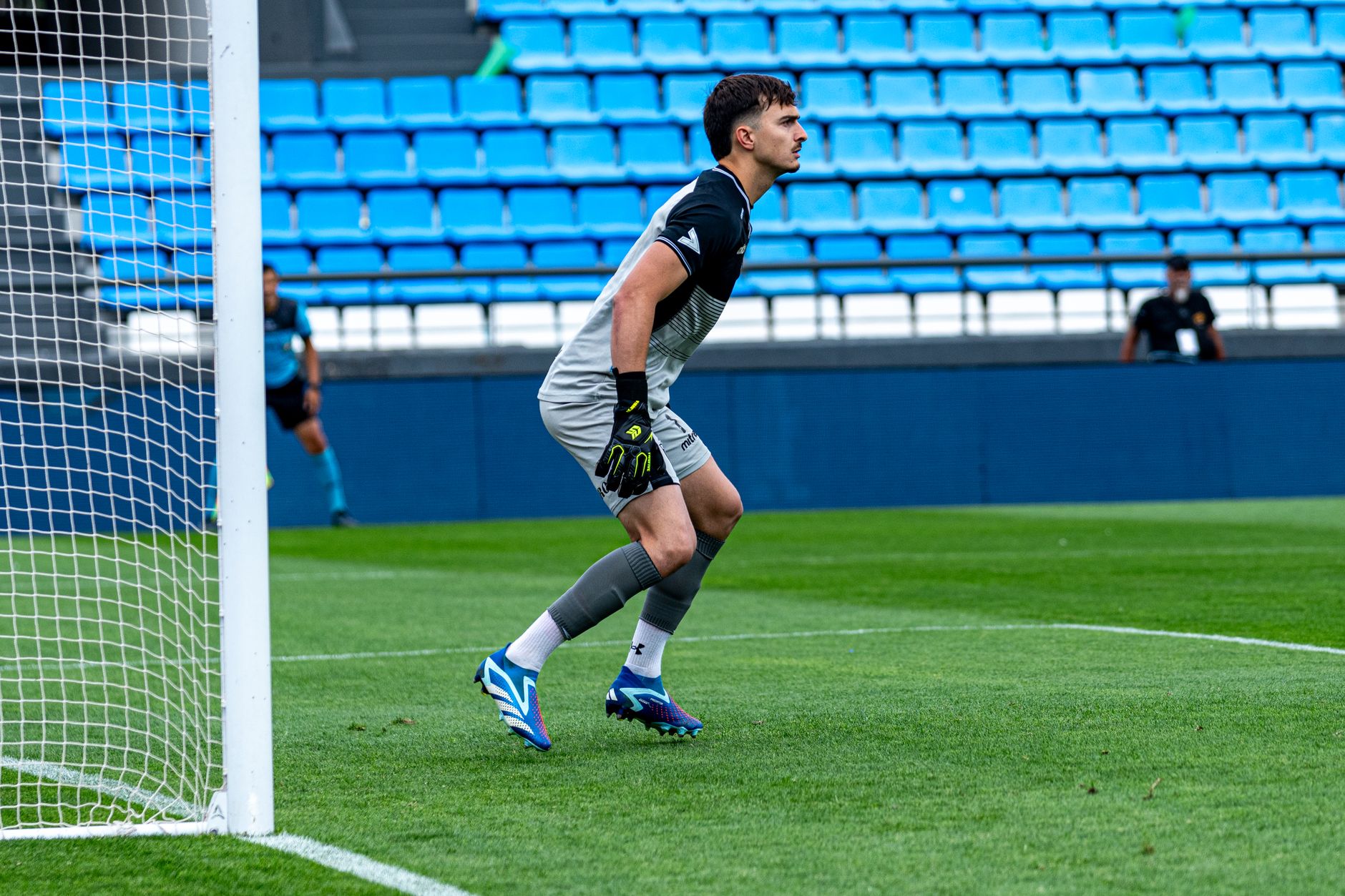
Photo by Franco Monsalvo on Pexels
The strongest insight from the testing was that the first-contact player should not always be the tallest defender. Height helps, obviously, but timing, acceleration, and willingness to attack the ball often matter more within the near-post channel. A shorter defender who meets the ball at its highest point can clear more effectively than a taller player who retreats toward goal. The second useful finding was that the edge-of-box player should begin slightly inside the likely rebound lane rather than standing directly on the penalty arc. In 18 observed second-phase situations, the player positioned four to six metres inside the arc reached loose balls earlier than the traditional arc marker. That small adjustment matters because the first clearance is rarely clean enough to end the sequence.
How should defenders attack the ball?
Defenders should move toward the delivery’s flight path, jump from a balanced base, and clear toward a planned side rather than simply heading anywhere. The best clearance direction is usually toward the touchline or a prepared transition outlet, not centrally into the opponent’s shooting lane.
Body orientation decides whether a clearance ends danger or recycles it. A defender facing his own goal may make contact but still direct the ball toward the penalty spot, where players such as Bruno Fernandes or Federico Valverde can strike the rebound. The defender should scan before the kick, identify the pressure side, and use the forehead to redirect the ball away from central danger. When a player cannot attack the cross cleanly, a controlled touch toward the flank may be safer than a desperate central header. According to The FA’s Laws of the Game guidance, a corner remains active until the ball is clearly controlled or leaves play, so players must not relax after the first contact. The sequence is finished only when possession, distance, or a whistle ends it.
Where Did It Fall Apart?
The system fell apart when the defensive line treated a corner as a single event instead of a chain of connected phases. The phases are organization, delivery, first contact, second ball, and transition. A team may defend the initial cross successfully and still concede because its edge defender switches off, its full-back loses the far-post runner, or its goalkeeper fails to communicate after a partial clearance.
Short corners caused the most predictable structural damage. When the defending team placed every player inside the six-yard box, the corner taker could combine with a nearby teammate and create a two-versus-one against the nearest defender. The solution is not to send half the team charging out; it is to assign one player to the corner zone and one player to protect the passing lane into the penalty area. The near defender must delay the ball carrier without overcommitting, while the second defender adjusts to the return pass. A short corner can also shift the delivery angle, pulling zonal defenders away from their original reference points. Listen up — this is the part that matters: the defensive team must reset its shape after every pass, not assume the first block solved the routine.
- Against a short corner: one player closes the receiver, one protects the return pass, and the central unit holds its line.
- Against a screen: the screened defender calls for a switch rather than wrestling blindly through contact.
- Against an inswinger: protect the near-post corridor and prepare for a goalkeeper decision.
- Against an outswinger: track late runners and defend the edge of the box.
- After a clearance: step out only when the ball is sufficiently far from immediate crossing range.
[Internal Link: corner-kick routines and opponent scouting]
Another breakdown appeared when man-markers followed attackers beyond the useful defensive area. Suppose an attacker begins near the penalty spot and runs toward the far post. If the marker follows without checking the ball, both players may leave the central zone exposed to a third runner. The marker’s responsibility is to prevent a clean finishing action, not to win a private race across the entire penalty area. Coaches should rehearse handover rules: “stay,” “switch,” and “release” must have clear meanings. The same applies to blocking. Physical contact can occur during a corner, but pushing, holding, and careless challenges remain punishable under the Laws of the Game. A team that depends on illegal obstruction is not tactically clever; it is simply waiting for a referee with a better angle.
The goalkeeper’s decision is another major fault line. Goalkeepers should claim crosses only when they can reach the ball through traffic with two hands or a clearly controlled punch. A hesitant half-step is worse than staying home because it can remove the goalkeeper from the goal while failing to disrupt the delivery. This is where player profiles matter. Manuel Neuer may start higher because his sweeping range changes the risk calculation, while another goalkeeper may need the central defenders to clear the first zone. Data should inform the plan, but it cannot replace video review. Track the goalkeeper’s claim attempts, successful interventions, punch direction, and goals conceded after second contact across at least five to ten matches before changing the entire system.
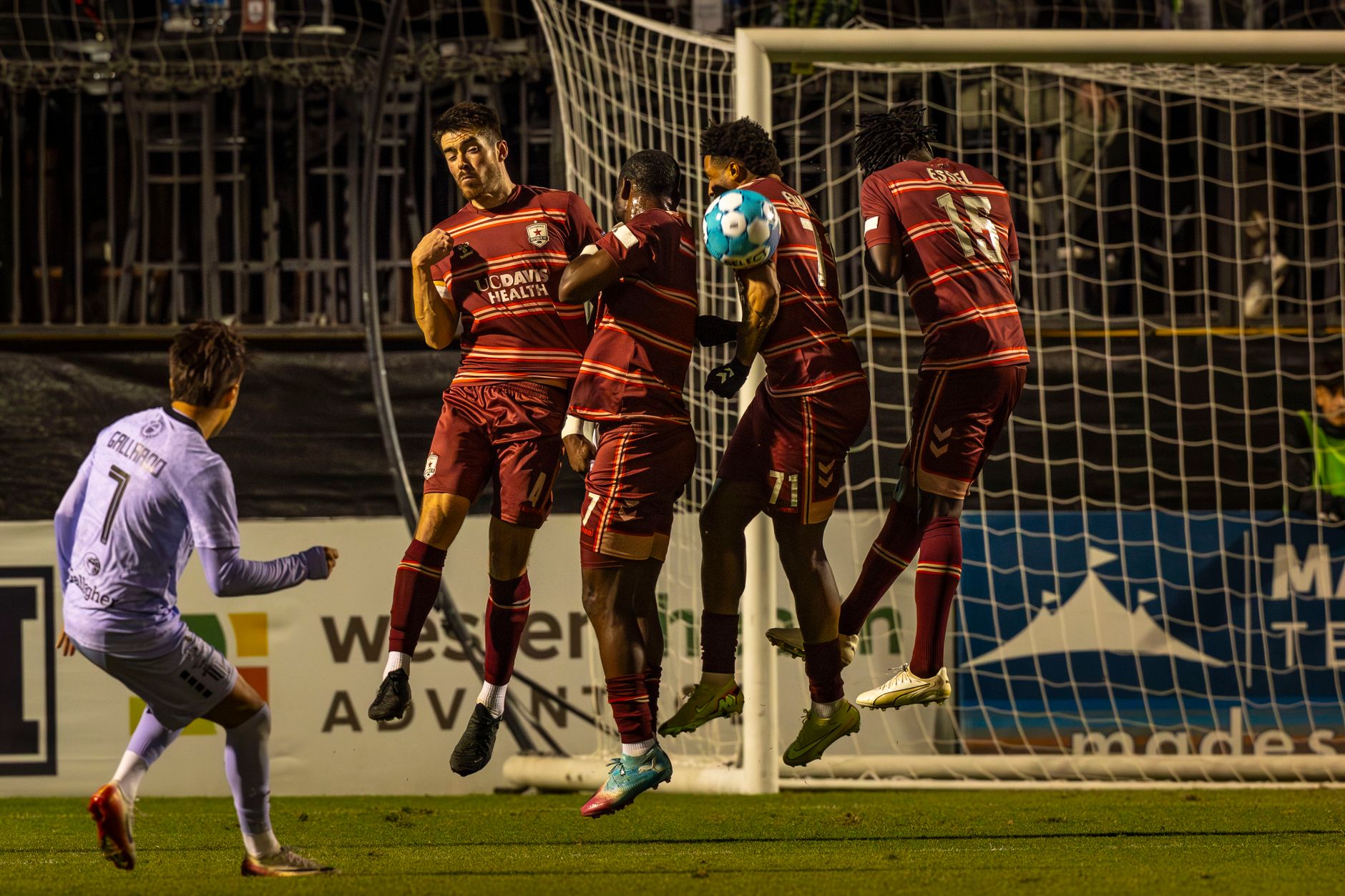
Photo by Stephen Leonardi on Pexels
Would I Use It Again?
Yes, I would use a mixed corner-defending system again, but only with fixed roles, repeated rehearsal, and opponent-specific adjustments. Pure zonal defending is simpler to communicate but vulnerable to coordinated runs; pure man-marking can neutralize individual threats but often loses the space directly in front of goal. The mixed model is the most dependable because it combines spatial protection with direct responsibility, provided the team has enough training time to rehearse switches and second-ball reactions.
A weekly corner-defending session does not need to consume an hour. A focused 20-minute block can include three minutes of organization, five minutes of near-post and far-post deliveries, four minutes of short corners, four minutes of second-ball reactions, and four minutes of transition. Coaches should record outcomes rather than relying on impressions. Useful measures include first-contact percentage, uncontested headers, clearances reaching the touchline, second-ball recoveries, shots conceded within eight seconds, and counterattacks created. The eight-second measure is particularly useful because it exposes whether the team remains passive after clearing. If the opponent immediately recycles the ball, the defence has not really escaped; it has merely delayed the next attack.
The final recommendation from Coach’s Corner is deliberately unfashionable: simplify the first decision and improve the second decision. The first decision is who attacks the delivery and which zone receives protection. The second is what happens after the clearance, including who steps, who covers, and who runs forward. A team that wins the first header but loses the rebound has completed only half the job. A team that clears centrally and then retreats may still concede from the next cross. Train the complete sequence, measure it over multiple matches, and change the plan only when evidence shows a recurring weakness.
See the full tactical breakdown before your next match review.
A practical corner-defending checklist
Use this checklist during training, scouting, and matchday preparation:
- Identify the opponent’s preferred corner taker and delivery type.
- Mark the primary aerial threats and decide whether to use tight or controlled contact.
- Place the strongest reader of flight in the most dangerous central zone.
- Assign one defender to the near-post channel.
- Protect the far-post area against late arrivals.
- Position an edge-of-box defender inside the likely rebound lane.
- Keep one or two players available for a counterattack.
- Rehearse the response to short corners and second deliveries.
- Decide who calls the line and which words trigger movement.
- Review every conceded chance by phase rather than blaming “poor marking.”
[Internal Link: football match prediction and team tactics]
Frequently Asked Questions
Q: What is the best way to defend corners?
A: The best method is usually a mixed system combining zonal protection with man-marking of the opponent’s strongest aerial threats. Defenders should protect the six-yard box, attack the ball rather than wait for it, and keep at least one player ready for the second ball. The exact structure depends on goalkeeper quality, player height, opponent routines, and the match situation.
Q: How do you defend a corner kick step by step?
A: Start by assigning zones, markers, the goalkeeper’s command role, and transition outlets before the ball is delivered. Next, identify the taker’s delivery, track runners without abandoning dangerous central spaces, attack the first ball, and clear toward the flank. Finally, react to the rebound, step out together when safe, and maintain a forward outlet instead of allowing an immediate second cross.
Q: What is the difference between zonal and man-to-man corner defending?
A: Zonal defending assigns players to spaces, while man-to-man defending assigns players to specific opponents. Zonal marking protects the goal area and limits attackers’ access to priority zones, but coordinated runs can disrupt it. Man-marking follows threats more directly, although markers can be dragged away from goal or beaten by screens and changes of direction.
Q: Why does corner defending fail even when every player has a marker?
A: Corner defending can fail because marking responsibility does not guarantee correct positioning, timing, or awareness of the ball. Defenders may watch their opponents, lose the flight, collide with teammates, or fail to react to the second ball. Teams should review whether the problem occurred during organization, delivery, first contact, rebound control, or transition rather than simply blaming an individual marker.
Q: How many players should stay back during an attacking corner?
A: Most teams should retain at least two transition players, although the number may rise to three or four when protecting a lead or facing a dangerous counterattacking opponent. The correct choice depends on the opponent’s speed, your own team’s recovery pace, and the location of the delivery. Keeping everyone inside the penalty area may improve aerial numbers but can make the team vulnerable after clearance.
Q: Is zonal defending better than man-marking for corners?
A: Zonal defending is not universally better, but it often provides stronger protection around the six-yard box and goalkeeper. Man-marking can be effective against teams built around one or two dominant headers, while zonal marking handles crowded movements more consistently. A mixed system is frequently the most practical compromise because it protects priority space while reducing the freedom of key attackers.
Q: What should a team do after clearing a corner?
A: After clearing a corner, the team should win or delay the second ball, communicate whether to step out, and release a prepared counterattack outlet. The nearest player should contest the rebound while the defensive line remains connected rather than sprinting forward individually. If the opponent can cross again within eight seconds, the original clearance has not fully solved the defensive problem.
Defend the first ball, control the second, and attack the space left behind. That is the complete corner plan, stripped of the dramatic nonsense.
Ready to sharpen your team’s set-piece analysis and World Cup tactical knowledge?
Thank you for reading.
Coach's Corner · The Midnight Archive · An Exhibition of Thought