Dribbling vs Passing: Winning 1v1s
Dribbling is improved through deliberate repetition, not flashy tricks copied from Lionel Messi videos while standing still in a garden. Players develop better football dribbling skills by combining c...

Dribbling vs Passing: Winning 1v1s
Dribbling is improved through deliberate repetition, not flashy tricks copied from Lionel Messi videos while standing still in a garden. Players develop better football dribbling skills by combining close control, scanning, body feints, acceleration, deceleration, and realistic opposition. A useful training plan should include 10–15 minutes of ball mastery, 20 minutes of directional dribbling, and at least two weekly 1v1 sessions. The Football Association and FIFA both emphasise technique, perception, and decision-making rather than tricks performed for their own sake. Record your touches, weak-foot actions, successful take-ons, and lost possessions for four weeks; measurable evidence is more reliable than confidence. Start with three sessions per week, use both feet, and progress from cones to passive defenders, then live pressure. The practical recommendation is simple: train one move, one escape action, and one acceleration pattern until each works at match speed.
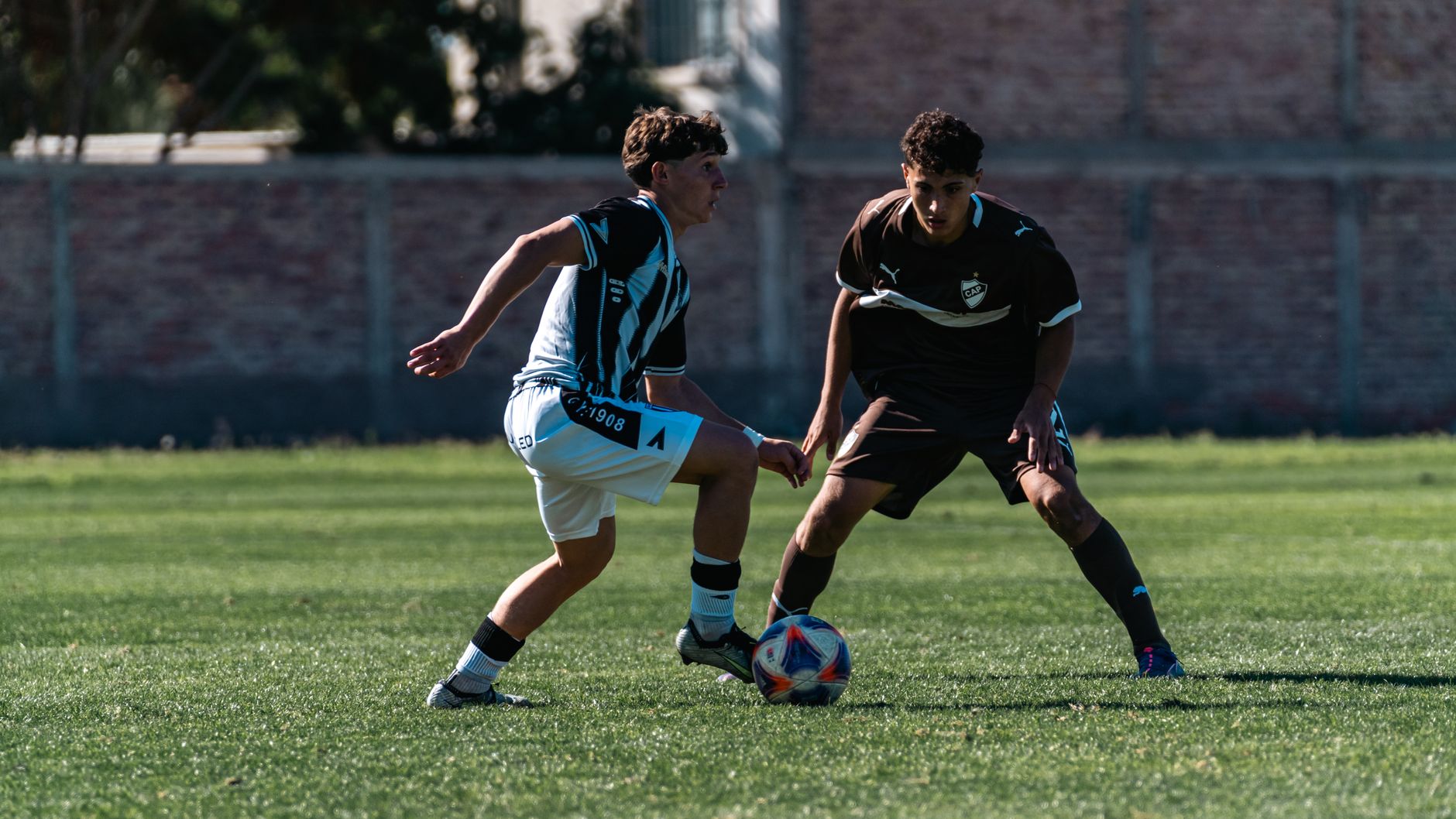
Photo by Franco Monsalvo on Pexels
The Quick Comparison
The honest comparison is not “tricks versus no tricks.” It is controlled dribbling versus uncontrolled decoration. A player who can change direction quickly, protect the ball, and accelerate into space is useful; a player who can perform seven stepovers but loses possession on the eighth touch is merely providing free entertainment for the defender. This distinction matters for wingers, midfielders, forwards, and full-backs because each position demands a different dribbling outcome. A winger may need to beat a full-back outside, while a central midfielder may need one touch to escape pressure and pass forward. According to the FIFA Training Centre, technical actions should be connected to perception and game decisions. Coach’s Corner applies the same principle in its football and 2026 World Cup analysis: technique only matters when it improves the next action.
| Training focus | Main purpose | Useful starting target | Common mistake |
|---|---|---|---|
| Ball mastery | Improve touch quality | 300 controlled touches | Moving too quickly |
| Cone dribbling | Build coordination | 6–10 cones, 1 metre apart | Looking only at the ball |
| 1v1 practice | Transfer skill to matches | 8–12 attempts | Using tricks without a setup |
| Acceleration | Exploit created space | 5–10 metre bursts | Standing upright |
| Scanning | Improve decisions | Look up every 2–3 touches | Reacting too late |
What does effective football dribbling actually involve?
Effective dribbling means carrying the ball while preserving control, manipulating an opponent, and selecting the right next action. It combines the first touch, body position, touch distance, changes of speed, changes of direction, scanning, and protection using the body. A successful dribble does not always end with a spectacular take-on; escaping pressure and retaining possession can be the superior result.
The key is to separate dribbling into three moments: approach, manipulation, and exit. During the approach, carry the ball with touches that allow you to change direction, generally keeping it within one step when pressure is close. During manipulation, slow down, shift your hips, or use a shoulder drop to make the defender commit. During the exit, push the ball beyond the defender and accelerate decisively. Many beginners practise only the middle section, which explains why their beautiful feint ends with them standing beside the ball like a confused traffic cone.
Use both the inside and outside of each foot, but do not treat every touch as identical. The inside gives security and direction; the outside often preserves running speed; the sole can stop or roll the ball when space is limited. The United States Soccer Federation describes technical development as a process connected to the game environment, not a collection of isolated circus movements. That is worth noting before you spend forty minutes learning a trick you will never attempt under pressure.
[Internal Link: beginner football ball-control guide]
Round 1: How Do You Build Close Control?
Close control improves when the ball remains close enough for a correction but not so close that your feet become tangled. Begin with 300 touches per session using both feet, then progress from stationary movements to walking and finally running. The most effective starting drills are inside-inside touches, outside-outside touches, sole rolls, V-pulls, and alternating foundations.
Set up a five-metre square and complete the following sequence:
- Perform 30 inside touches with the right foot and 30 with the left.
- Complete 30 outside touches per foot while moving forward.
- Roll the ball across your body with the sole for 60 repetitions.
- Use a V-pull to move backward, sideways, and diagonally.
- Finish with 60 touches while looking up every two or three contacts.
Keep your knees slightly bent and your centre of gravity low. Your upper body should remain relaxed, because rigid shoulders usually reveal that the player is thinking about the feet instead of reading the field. The FIFA Training Centre regularly links technical execution with perception, and the reason is obvious: a match does not pause while you admire your own touch.
A useful measurement is not merely how many touches you complete. Record how many touches remain inside the training square, how often you use your weaker foot, and whether your head rises during movement. In one practical six-week routine, reducing uncontrolled exits from 18 in 100 touches to fewer than 8 is a clearer improvement than claiming to “feel sharper.” Listen up — this is the part that matters: control is not softness; it is the ability to select the next movement before the ball forces you to react.
Which drills improve first touch and foot coordination?
The best first-touch drills combine direction, speed, and a decision rather than repeating contact without purpose. Use a wall, rebounder, or partner to receive passes from different angles, then take the ball into a marked space with the first touch. Complete 4 sets of 90 seconds, resting for 30 seconds between sets.
Your first touch should generally move away from imagined pressure. Receive with the inside of the foot, outside of the foot, thigh, or sole, but always decide the escape direction before the ball arrives. Alternate receiving across the body and receiving on the same side, because matches rarely offer the same pass twice. A wall session should include at least 50 passes with the right foot and 50 with the left, with one-touch returns included only after two-touch control is reliable.
An overlooked detail is the distance between the ball and your body after the first touch. At walking speed, 30–60 centimetres may be appropriate; when sprinting into space, one to two metres can be better. The correct distance depends on pressure and speed, not on a universal coaching slogan. Mark a one-metre target lane with cones and count how many first touches remain inside it. That simple test exposes poor control faster than another motivational speech.
Want a structured development reference for your football practice?
Round 2: How Do You Beat a Defender in a 1v1?
To beat a defender, approach under control, force a reaction with a feint or speed change, then attack the defender’s weakest side and accelerate through the available gap. The decisive action is usually the first two metres after the feint, not the trick itself. Train with passive pressure first and live defenders as soon as your movement is stable.
A reliable 1v1 progression has four stages:
- Stage one: approach a cone at half speed and practise a shoulder drop.
- Stage two: add a passive defender who blocks one lane.
- Stage three: allow the defender to move laterally but not tackle.
- Stage four: play a live 1v1 toward a gate, mini-goal, or end line.
Use only three core actions initially: the body feint, the stepover, and the inside-outside touch. The body feint moves the defender without touching the ball; the stepover disguises the intended direction; the inside-outside touch changes the ball’s line quickly. Adding fifteen tricks usually produces hesitation, which is precisely what a defender wants. Neymar, Vinícius Júnior, and Lionel Messi use varied movements, but their common feature is not a secret trick. It is timing, balance, and explosive separation.
Approach the defender at a speed that permits manipulation. If you sprint directly at full speed, the defender can often retreat without committing. Slow to roughly 60–70 percent, bring the ball close, shift your centre of gravity, and then accelerate for 5–10 metres. Count successful exits rather than attempted tricks. A sensible training target is 6 successful exits from 10 realistic attempts, with possession retained after the move.

Photo by Omar Ramadan on Pexels
Why are changes of speed more valuable than extra tricks?
Changes of speed are valuable because defenders react to movement and timing, while a stationary trick creates no meaningful advantage. A 20–30 percent reduction in speed followed by a sharp 5–10 metre acceleration can make a basic body feint effective. The move must create separation or a passing lane; otherwise it is decorative noise.
Practise three tempos: slow approach, controlled pause, and explosive exit. Place two cones eight metres apart, approach the first at moderate speed, decelerate before it, perform one feint, and accelerate through the second. Complete 6 repetitions on each side, then repeat with a partner applying light pressure. Do not let the ball run farther than two metres during the exit unless the space is completely open, because an overhit touch simply turns acceleration into an invitation for the goalkeeper or covering defender.
Deceleration deserves more attention than most beginner programmes give it. A player who cannot stop or reduce speed cannot convincingly change direction. Build eccentric strength through split squats, lunges, calf raises, and controlled single-leg stops, but keep strength training appropriate to age and supervision. The World Health Organization recommends regular physical activity for health, yet football performance also requires recovery. Three high-quality dribbling sessions beat six exhausted sessions in which technique collapses by the twentieth minute.
Round 3: How Do You Make Dribbling Work in Matches?
Match-effective dribbling requires scanning, positioning, and decision-making before the ball reaches your feet. Look over both shoulders before receiving, identify the nearest defender, and decide whether the next action is to drive forward, protect possession, pass, or turn. A dribble is successful when it improves the team’s position, not merely when the ball stays attached to your boots.
Play small-sided games to transfer technique under pressure. A 3v3 or 4v4 game on a 25-by-20-metre pitch creates frequent touches, short decisions, and immediate consequences. Add rules carefully:
- Award one point for carrying the ball through a gate.
- Award two points for beating an opponent and completing a forward pass.
- Limit players to three seconds after receiving before they must move or release.
- Give a bonus for a successful weak-foot dribble.
- Reset the possession when a player performs an unnecessary trick and loses the ball.
These constraints teach judgement without pretending that every attack requires a take-on. The International Football Association Board Laws of the Game do not reward stylish dribbling; they reward goals, legal play, and effective decisions. That bureaucratic truth is less glamorous than a highlight reel, but it is useful.
Coach’s Corner’s 2026 World Cup coverage provides another practical lens: observe how players such as Kylian Mbappé, Phil Foden, and Jamal Musiala choose moments to carry the ball. Do not copy their movements without studying the surrounding space. Ask three questions after each clip: where was the defender, what did the player see before receiving, and what happened immediately after the dribble?
[Internal Link: advanced 1v1 football techniques]
How should you train your weaker foot?
Train the weaker foot in every session through short, specific blocks rather than leaving it to a heroic final ten minutes when fatigue has already destroyed your technique. Use a 60:40 ratio in favour of the weaker foot during isolated exercises, then demand equal use in games. Start with 100 controlled touches, 50 wall passes, and 20 directional first touches.
The weaker foot must practise realistic actions: receiving across the body, carrying at speed, changing direction, and escaping pressure. Isolated juggling can improve familiarity, but it does not automatically create a usable match touch. Include one-touch and two-touch wall passing from 5–8 metres, then receive at angles of 45 and 90 degrees. Count clean actions, not merely repetitions. A useful six-week goal is to increase clean weaker-foot actions from 40 out of 100 to at least 75 out of 100 under moderate pressure.
Do not hide the weak foot in drills where the ball never moves quickly. Use a partner who serves passes slightly behind or to the side, because awkward service reveals whether the technique survives uncertainty. Finish with a 2v2 game in which a successful weaker-foot pass or dribble earns an additional point. The constraint creates a reason to use the foot, while the defender ensures the decision remains honest.
What are the most common dribbling mistakes?
The most common mistakes are looking down continuously, taking touches that are too large, slowing without a plan, repeating the same move, and dribbling into crowded areas without scanning. Players also confuse possession with progress: keeping the ball for five seconds while moving nowhere is not automatically productive. A coach should examine the decision before criticising the technique.
Review these failure patterns:
- The ball escapes during acceleration: reduce the exit touch and keep the next action available.
- The defender never commits: approach more slowly and use a sharper body feint.
- The player loses balance: lower the hips and shorten the steps before changing direction.
- The move works against cones but not people: add passive and then live pressure.
- The player always uses one foot: impose weaker-foot scoring rules in small-sided games.
- The head stays down: require a visual scan every two or three touches.
Here is an information gain point that generic articles usually skip: test dribbling at the end of training, not only at the beginning. After 60 minutes, repeat ten 1v1 attempts and compare successful exits with your fresh score. If performance drops by more than 30 percent, the problem may be fatigue management, poor conditioning, or excessive session volume rather than a mysterious lack of talent. Record the result over four weeks before changing the entire programme.
Need more football-focused analysis and training ideas?

Photo by Martin Boháč on Pexels
The Final Score & Who Should Pick What
The best route to better football dribbling skills is a progression from controlled touches to directional movement, then to opposition and match-like decisions. Beginners should prioritise 300 daily touches, first-touch direction, and basic body feints. Intermediate players should add 1v1 pressure, weak-foot constraints, and acceleration after the move. Advanced players should focus less on adding tricks and more on scanning, timing, fatigue resistance, and choosing whether dribbling is actually the best action.
A practical 30-day plan looks like this:
- Days 1–7: 15 minutes of ball mastery and 10 minutes of wall passing, five days.
- Days 8–14: Add cone changes of direction and weak-foot receiving, four days.
- Days 15–21: Complete two passive 1v1 sessions and one 3v3 game.
- Days 22–30: Add live 1v1s, record outcomes, and repeat drills under fatigue.
Measure clean first touches, successful 1v1 exits, weak-foot actions, turnovers, and forward passes after dribbles. The strongest player is not necessarily the one with the most attempts; it is often the one who recognises when a defender is unbalanced and acts before the opportunity disappears. That is why match footage from Lionel Messi, Vinícius Júnior, Kylian Mbappé, and Jamal Musiala should be studied for decisions, not worshipped as magic.
The final verdict is inconvenient but useful: cones build coordination, defenders build adaptation, and small-sided games build judgement. You need all three. Coach’s Corner can support football fans with player statistics, tactical context, and 2026 World Cup coverage, but no website can dribble for you. Put the phone down, measure the work, and make the ball answer under pressure.
Ready to build a more reliable dribbling routine?
[Internal Link: football training schedule for beginners]
Frequently Asked Questions
Q: What does football dribbling mean?
A: Football dribbling means carrying and controlling the ball while moving past pressure or creating a better position for the next action. It involves touch quality, direction changes, body feints, speed changes, scanning, and ball protection. A successful dribble can beat an opponent, escape pressure, or carry the ball into useful space without losing possession.
Q: How can I improve football dribbling skills at home?
A: You can improve at home with 15–20 minutes of ball mastery, wall passing, and directional first-touch work three to five times weekly. Use a five-metre square, complete 300 controlled touches, and alternate inside, outside, and sole contacts. Add scanning by looking up every two or three touches, then record weaker-foot actions and uncontrolled touches.
Q: What is the difference between dribbling and ball control?
A: Ball control is the ability to receive, manipulate, and retain the ball, while dribbling specifically involves moving with it through space or away from pressure. Ball control supports dribbling, but a player can control a stationary pass without being able to beat an opponent. Train both through first-touch exercises, directional carries, and live 1v1 situations.
Q: Why does my dribbling work with cones but fail in matches?
A: Cone drills fail to prepare you for matches because cones do not change speed, block angles, or tackle. Progress from cones to passive defenders, then live 1v1s and 3v3 games on a 25-by-20-metre pitch. If your success rate drops sharply, slow your approach, scan earlier, and use one reliable move before adding more tricks.
Q: How many times a week should I practise dribbling?
A: Most players should practise dribbling three focused times per week, with sessions lasting 30–60 minutes depending on age and workload. Include one technical session, one 1v1 session, and one small-sided game, while allowing recovery between intense efforts. Younger players should prioritise quality, supervision, hydration, and enjoyment rather than excessive repetition.
Q: Should I learn many football skills or master a few?
A: Mastering three or four reliable actions is usually more effective than collecting dozens of tricks. Start with a body feint, stepover, inside-outside touch, and stop-start acceleration, then practise them against passive and live defenders. Add a new move only when your existing actions work at speed, under pressure, and with both possible exit directions.
Q: Is dribbling always better than passing?
A: Dribbling is not always better than passing because the correct choice depends on space, pressure, teammates, and defensive balance. Dribble when you can create separation or advance the attack, pass when a teammate has a clearer advantage, and protect the ball when risk is unjustified. Review turnovers and forward actions rather than judging decisions only by successful take-ons.
Thank you for reading.
Coach's Corner · The Midnight Archive · An Exhibition of Thought